The Unseen Impact: How Referee Decisions Shape the Youth Soccer Experience
Every youth soccer parent, player, and coach has a story. A moment etched in memory where a referee's decision, or lack thereof, swung the momentum of a game, or even determined its outcome. It's a universal truth in sports, from the professional leagues down to the U8 recreational pitch: officials are human, and humans make mistakes. But when those mistakes directly influence the scoreboard, especially in a tightly contested match, the feelings of injustice can be profound.
Let's be honest, we've all seen it. The quick counter-attack, the ball is slotted into the net, the crowd roars... but wait, was that attacker offside? The referee was on the far side of the field, perhaps screened by other players, and didn't see it. The goal stands. The game ends with a one-goal difference, and that controversial call decided the match. It's frustrating, it's disheartening, and it sparks heated debates long after the final whistle.
So, how do we navigate this inherent challenge in youth sports? How do we ensure that while we strive for fair play, we also teach our young athletes resilience, respect, and the ability to control what they can, rather than dwell on what they can't?
Key Takeaways for Navigating Referee Decisions:
- Human Error is Inevitable: Referees are people, and complex, fast-paced games make perfect officiating nearly impossible.
- Focus on What You Can Control: Players should learn to play through calls, maintain composure, and focus on their performance.
- Coaches as Educators: Guide players on adapting to adversity and using perceived injustices as motivation.
- Parents as Role Models: Model respect for officials and emphasize effort and sportsmanship over results.
- The Bigger Picture: Youth sports are about development, life skills, and passion, not just winning or perfect officiating.
The Inherent Challenge: Why Referees Make Mistakes
To understand the frustration, it helps to understand the challenges faced by referees, particularly at the youth level.
The Speed and Complexity of the Game
Soccer is a fluid, dynamic sport. Plays unfold in milliseconds, often involving multiple players in tight spaces. A referee needs to track the ball, multiple players, potential fouls, offside positions, and boundaries—all at once. This is an incredibly demanding cognitive and physical task.
Limited Perspectives
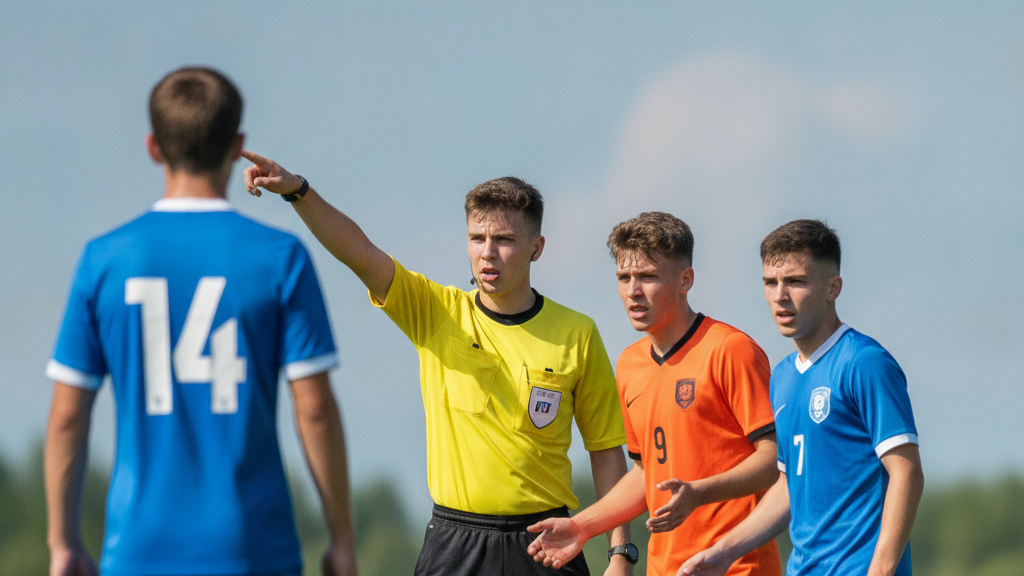
Unlike professional games that often employ multiple assistant referees (linesmen) and sometimes even Video Assistant Referees (VAR), most youth matches rely on one central referee, or perhaps one referee and two club linesmen (who may not be certified officials). A single pair of eyes simply cannot see every angle simultaneously. What looks clear from the sidelines might be obscured from the center of the field, and vice-versa.
Training and Experience Levels
Youth referees often start young themselves, gaining experience match by match. While dedicated, their training and experience may not be as extensive as higher-level officials. They are learning and developing, just like the players. We expect perfection, but often forget that they are part of the developmental ecosystem too.
The "Offside" Conundrum
The offside rule is arguably one of the most challenging calls in soccer. It requires judging the exact moment the ball is played, the position of the attacking player, and the position of the second-to-last defender (or the ball itself) – all in a split second. From a distance, or when players are bunched, it becomes incredibly difficult to make the correct call consistently.
The Impact: Beyond the Scoreboard
A perceived "bad call" doesn't just affect the score; it has a ripple effect on players, coaches, and parents.
On Players
For young athletes, an unfair call can be devastating. It can lead to:
* Frustration and Anger: Feeling cheated can derail focus and lead to emotional outbursts.
* Demotivation: If they feel their effort is undermined by external factors, players might lose heart.
* Loss of Trust: They might begin to distrust officials or even the fairness of the game itself.
On Coaches
Coaches bear the responsibility of managing the team's response. A coach's reaction to a call can either escalate or de-escalate the situation. It's a fine line between advocating for your team and modeling respectful behavior.
On Parents
Parents are often the most vocal critics of referee decisions. Their emotional investment in their child's success can lead to:
* Heated Sideline Comments: Creating a negative and hostile environment.
* Undermining Officials: Publicly criticizing refs diminishes their authority and makes their job harder.
* Teaching the Wrong Lessons: Focusing solely on the injustice can teach children that external factors are always to blame, rather than focusing on their own actions and resilience.
Navigating the Inevitable: Strategies for Players, Coaches, and Parents
So, how can we collectively foster an environment where referee mistakes are acknowledged but don't define the youth soccer experience?
For Players: Control the Controllables
The most powerful lesson a young athlete can learn is to focus on what they can control.
* Play Through the Whistle: Teach players to never stop playing until they hear the whistle. An uncalled foul or offside doesn't mean the play is dead.
* Maintain Composure: Emotional reactions rarely help. Encourage players to take a deep breath, refocus, and channel frustration into renewed effort.
* Respect the Decision (Even if you Disagree): A player arguing with a referee is rarely productive and often results in a card. Teach them to voice concerns through their captain or coach respectfully, if at all.
* Focus on Performance: Did they give their best effort? Did they execute their role? These are the metrics they control, regardless of the officiating.
For Coaches: Guiding Resilience and Sportsmanship
Coaches are pivotal in shaping players' responses to adversity.
* Model Calmness: Your reaction sets the tone for the team. Stay composed, even when you disagree with a call.
* Educate, Don't Criticize: Use moments of controversial calls as teaching opportunities. Discuss how to adapt, how to play smarter, and how to maintain focus.
* Emphasize Effort Over Outcome: Reinforce that true success comes from effort, teamwork, and growth, not just wins.
* Communicate Respectfully: If you need to address an official, do so calmly and professionally, away from players and parents. Understand the rules of engagement for communication with officials in your league.
* Teach Adaptability: Sometimes, a referee's interpretation of a rule might differ from yours. Teach players to adapt to how this particular referee is calling the game.
For Parents: Fostering a Positive Environment
Parents play a critical role in promoting a healthy youth sports culture.
* Be a Positive Role Model: Your reactions from the sidelines profoundly impact your child. Cheer for effort, not just goals. Applaud good plays from both teams.
* Respect the Officials: Even if you disagree, refrain from yelling at or criticizing referees. This undermines their authority and teaches your child that disrespect is acceptable. Remember, many youth referees are volunteers or young adults just starting out.
* Understand the Game: Familiarize yourself with the rules of soccer, including the nuances of offside, fouls, and handballs. This can help you understand the difficulty of certain calls.
* Focus on Development: Shift the focus from winning at all costs to your child's growth, enjoyment, and skill development. A "bad call" doesn't negate the hard work or the joy of playing.
* Support the Program: Volunteer, offer positive encouragement, and understand that every element of the youth sports ecosystem, including officiating, is doing its best within its constraints.
The Bigger Picture: Life Lessons Beyond the Field
The experience of dealing with perceived unfairness from a referee is, in many ways, a microcosm of life itself. Life isn't always fair. Decisions won't always go your way. Learning to navigate these moments with grace, resilience, and integrity is one of the most valuable lessons youth sports can offer.
By focusing on sportsmanship, personal effort, and the development of skills—both athletic and emotional—we prepare young athletes not just for future games, but for future challenges in all aspects of their lives. The goal isn't to eliminate mistakes from officiating, for that's impossible. The goal is to equip our youth with the tools to respond constructively to those mistakes, to learn from them, and to continue pursuing their passion for the game with integrity.
Spatrian: Supporting Holistic Athlete Development
At Spatrian, we understand that youth sports are about more than just the final score. They're about consistent development, building character, and navigating challenges like controversial referee calls. Our platform helps players, coaches, and parents track progress, set goals, and manage the overall athletic journey. We believe in fostering an environment where athletes can thrive, learn resilience, and focus on their personal growth, regardless of external factors.
From managing complex travel team schedules and understanding high school co-op program guidelines to ensuring compliance with state-level PE educational requirements, Spatrian provides the tools to keep the focus on what truly matters: the well-rounded development of our young athletes. Let us help you put the triumphs and challenges of youth sports into perspective, ensuring every player has the support they need to succeed both on and off the field.