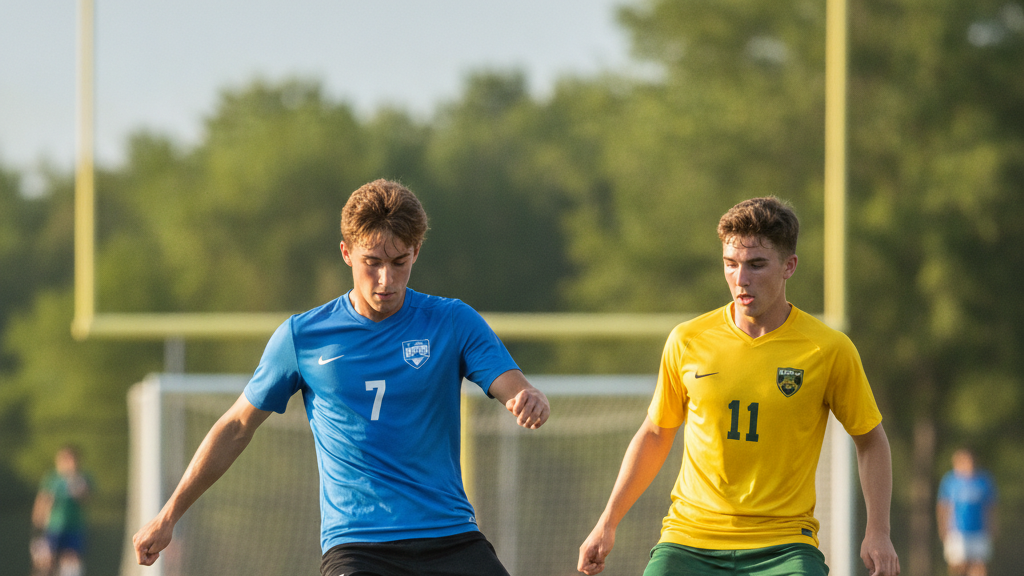
Overcoming the Homeschool Soccer Disadvantage: Addressing Club Favoritism and Finding Your Path
For many homeschooling families, youth soccer clubs offer a crucial avenue for athletic development, social interaction, and competitive play. However, a common concern often surfaces: the potential for a homeschool soccer disadvantage club favoritism dynamic. Parents worry that some clubs, either explicitly or implicitly, prioritize players who attend specific schools, leaving homeschooled athletes feeling overlooked or unfairly treated.
This concern is valid and deserves a closer look. If you're a parent, a student-athlete, or a program manager, understanding this landscape is key to ensuring equitable opportunities for all young players. This article will delve into the roots of this perceived favoritism, explore its impact, and provide actionable strategies to navigate the challenges, ensuring your homeschooled athlete can thrive.
Understanding the Landscape: Club Soccer and School Affiliations
It's no secret that the world of youth sports is deeply interconnected with school systems. High school coaches often have strong ties to local club teams, sometimes even coaching them. This synergy can be beneficial, creating clear pathways for players from club to high school. However, this very connection can inadvertently create a homeschool soccer disadvantage club favoritism scenario.
The Perceived Favoritism: Is It Real?
The perception that coaches will favor "institution's kids" isn't always rooted in malicious intent, but rather in practical realities and established relationships.
* Existing Relationships: Club coaches who also coach at a local high school naturally develop stronger, more frequent relationships with the players they see daily in both settings. This familiarity can, at times, influence playing time decisions or even recruitment.
* Recruitment Pipelines: Some clubs may informally serve as a feeder system for specific high school programs. Their training philosophies might align closely with a school's system, making the transition smoother for those particular students.
* Logistical Ease: Coordinating schedules, communicating with players, and even travel can sometimes be simpler when all players attend the same school, although this is a minor factor.
While overt discrimination is rare and usually against club policy, the subtle biases that arise from these connections can indeed manifest as a homeschool soccer disadvantage club favoritism experience. Homeschoolers might feel they have to work harder to prove themselves, or that their efforts aren't recognized on par with their school-attending peers.
The Impact on Homeschool Athletes: What's at Stake?
The consequences of this perceived bias can be significant for homeschooled athletes:
* Reduced Playing Time: Less time on the field means fewer opportunities to develop skills, build confidence, and contribute to the team.
* Limited Exposure: For aspiring collegiate athletes, less playing time or being overlooked can mean missing out on crucial exposure to scouts and college coaches.
* Team Dynamics: Feeling like an "outsider" can affect a player's morale, sense of belonging, and overall enjoyment of the sport.
* Slower Development: Consistent high-level play is vital for development. If a homeschooled player is consistently on the bench due to perceived favoritism, their progress can stagnate.
Navigating the Challenge: Strategies for Homeschool Soccer Players and Families
While the homeschool soccer disadvantage club favoritism concern is real, it's not insurmountable. Homeschooling families can empower themselves with knowledge and proactive strategies to find the right environment for their child.
Researching Clubs: Ask the Right Questions
Before committing to a club, thorough research and direct communication are essential.
* Club Philosophy: Inquire about the club's overarching philosophy. Do they prioritize player development for all, or do they have explicit ties to specific school programs?
* Homeschooler Integration: Ask specific questions about how homeschool athletes are integrated into teams. Do they have a significant number of homeschoolers? How do coaches ensure fair treatment and equal opportunities?
* Coach Backgrounds: Politely inquire about coaches' affiliations. Do they coach at local high schools? This isn't necessarily a red flag, but it's important context.
* Player Pathways: Understand the club's player development pathways. Are they transparent and merit-based, or do they seem to favor certain pipelines?
* Talk to Other Parents: Seek out other homeschooling families involved in local club soccer and ask about their experiences.
Emphasizing Merit and Performance
Ultimately, skill, attitude, and work ethic speak volumes.
* Focus on Fundamentals: Encourage your child to constantly work on their technical skills, tactical understanding, and physical fitness.
* Positive Attitude: A positive, coachable attitude, strong communication, and being a good teammate can overcome many perceived biases.
* Document Performance: Keep track of your child's performance in games and practices. If concerns about favoritism arise, having objective data can be helpful in discussions with coaches or club directors.
* Open Communication: Encourage your child to respectfully communicate with coaches about their goals and desire for playing time. Parents should also engage in respectful, constructive dialogue with coaches if concerns persist.
Seeking Alternative Pathways
If a particular club consistently exhibits a homeschool soccer disadvantage club favoritism, it might be time to explore other options.
* Smaller, Independent Clubs: Some clubs are less affiliated with specific schools and focus purely on player development for all.
* Olympic Development Program (ODP): ODP is a national program designed to identify and develop elite youth soccer players, independent of club or school affiliation.
* Independent Skills Coaches: Supplement club training with private coaching to enhance specific skills.
* Homeschool Sports Leagues: In some areas, homeschool sports leagues or teams are forming, providing a dedicated environment.
* Multi-Sport Participation: Encourage participation in other sports to broaden athletic development and minimize reliance on a single club.
Homeschooling, High School Sports, and PE Requirements: Understanding Your Rights and Options
Beyond club soccer, many homeschooling families also wonder about high school sports and meeting physical education requirements. Navigating these areas effectively is crucial for a well-rounded athletic and academic journey.
High School Athletic Co-op Programs for Homeschoolers
The ability for homeschooled students to participate in public school sports varies significantly by state and even by individual school district. However, many states do have provisions allowing homeschooled students to participate in extracurricular activities, including sports, at their local public school. These are often referred to as "part-time enrollment" or "extracurricular access" policies.
Key considerations for all states:
* Check State Laws: The first step is to consult your state's Department of Education website and the state's high school athletic association (e.g., the state affiliate of the National Federation of State High School Associations - NFHS). They will outline specific eligibility rules, which can include academic performance, residency requirements, and enrollment status.
* Local School District Policy: Even if state law allows it, individual school districts may have their own specific policies and procedures for homeschooler participation. Contact your local public school's athletic director or district superintendent's office.
* Academic Eligibility: Homeschoolers typically must meet the same academic eligibility standards as traditionally enrolled students. This often involves submitting grades or transcripts from their homeschool curriculum.
* Tryouts and Team Selection: Homeschoolers are generally subject to the same tryout and selection processes as other students.
Advocating for your child's right to participate in school sports where allowed by law is important. This can provide a valuable alternative or complement to club soccer, potentially sidestepping the homeschool soccer disadvantage club favoritism issue entirely within a school setting.
Meeting Physical Education Requirements
Homeschooling families are generally responsible for ensuring their children meet physical education (PE) requirements, which vary by state. Across most states, the emphasis is on regular physical activity and developing motor skills and healthy habits.
* Flexibility in Curriculum: One of the benefits of homeschooling is the flexibility to tailor the PE curriculum. Soccer practice, games, fitness training, and other physical activities can all count towards PE hours.
* Documentation is Key: Maintain detailed records of your child's physical activities, including dates, times, types of activity, and duration. This documentation can be vital for demonstrating compliance with state educational guidelines.
* Integrate Activity: PE doesn't have to be a separate, formal class. It can be integrated into daily life through active play, sports, and outdoor activities.
Ensuring your homeschooled athlete is compliant with both