One Soccer Training Platform for the Player
and Everyone Who Develops Them.
Spatrian is soccer training for players aged 13 to 18, in four parts that each work on their own and connect when you want them to. The player trains, their coach sets the work between sessions, their personal trainer sends the family a report after every hour, and for a homeschool family the same sessions become the PE record. Under all four: soccer drills, session plans, scoring, reports and an optional Audio Coach that hears the ball.
every part
a session
a week
kept
One platform, four parts
Pick the one that sounds like you. Each part works on its own, and none of them needs another: connect them later, or never. If you do, every door opens the same record of the player’s training.
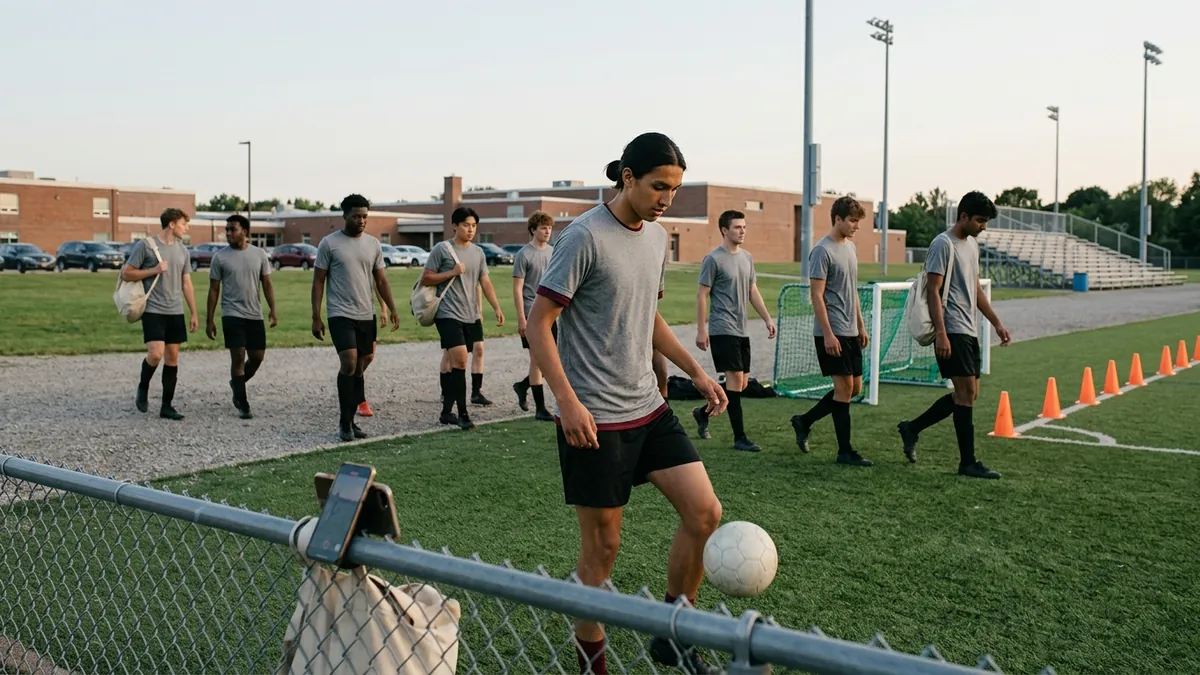
My teen is at school or plays for a club
Their own twenty minutes at home, on top of school PE and team practice, with a measured record of what stuck and a link their coach can read.
For players →
I coach a team
Your team’s season in one account, the home training each family’s phone counts, and AI match reports. Nobody ranked.
For school & club coaches →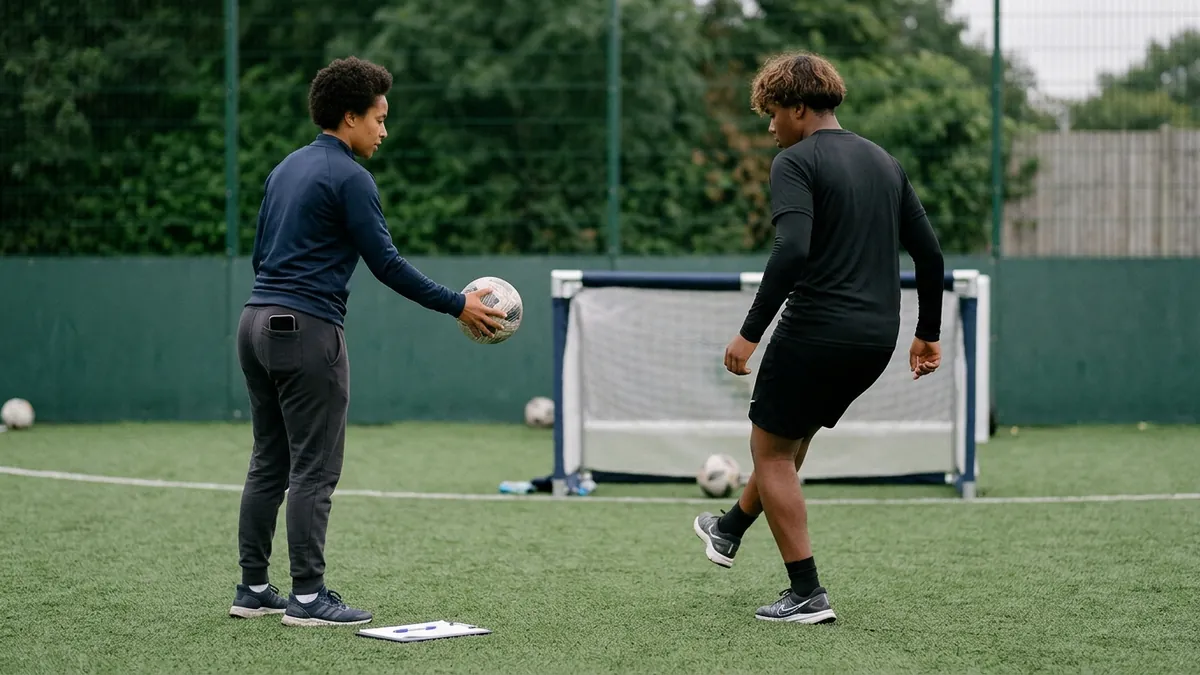
I train players one to one
Your clients, sessions from one-to-one drills scored as you go, and a private report for every family after every session.
For personal trainers →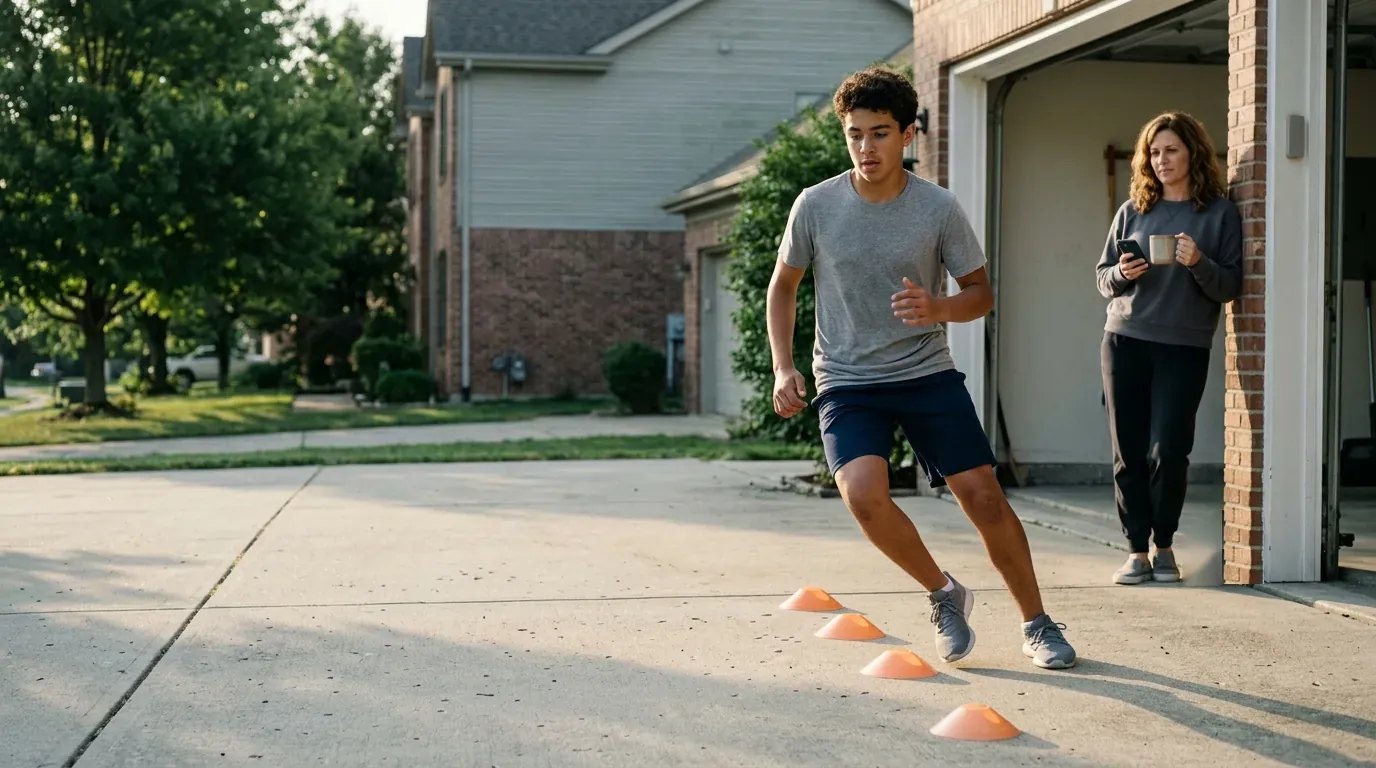
We homeschool
A 36-week PE curriculum taught through soccer, and the hours and records your state asks a homeschool family to keep, printed as a transcript anyone can check.
For homeschool families →Not sure yet? Keep reading. Everything below is true whichever door you take.
Each part on its own. One record if you connect them.
Most families juggle an app for practice, a group chat for the team, a trainer’s notes and, if they homeschool, a spreadsheet of hours. Each part stands on its own: a player needs no coach or trainer, a coach needs no family to sign up, a trainer’s families need no account, and connecting by code is always your choice. Connect them, and Spatrian keeps it all in one place, with the family deciding who sees what.
The player trains
Twenty minutes, with the Audio Coach or their own way. Every session lands in one record, and on four drills the phone can hear the ball, count it, and check later whether the skill held.
The coach sets the work
A coach runs the squad from their own account. If a family connects by code, the coach sees that player, sets a target at practice, and it comes back counted by the family’s phone.
The trainer reports
A personal trainer keeps their clients and sends a private report after every session, with or without the family on Spatrian. If the family connects, homework comes back counted. Their clients are theirs alone.
Homeschool keeps the record
For a homeschool family, the same sessions become PE hours, a portfolio and a transcript anyone can verify, against what your state asks for.
Practice Is Easy to Count.
Proof Is Not.
Any app can tell you a session happened. Almost none can tell you, two weeks later, whether anything stayed.
Is any of it actually sticking?”
The question a parent asks on the drive home and a coach asks at the first session back. A streak of sessions cannot answer it.
Counting the practice
- A streak of sessions, and no idea what any of them changed
- A tally typed in afterwards by whoever remembered to
- A coaching note written from a general plan, not from this player
- Every number read against other people’s children
The work was real. The evidence is a guess.
Measuring what held
- Four drills the phone hears, every touch stamped the moment it lands
- A cold check later: twenty touches, played before the coach says a word
- A verdict, kept, on whether the skill survived the time away
- Every number your player against their own past
You do not guess. The record answers.
The difference is not how hard they worked. It is
whether anyone came back later and checked.
How the check works
Soccer drills, session plans and reports. Use what fits.
The Audio Coach can run a session out loud and count the reps. A coach or trainer with methods of their own can plan, score and log sessions by hand instead. Either way, it all lands in the same record.
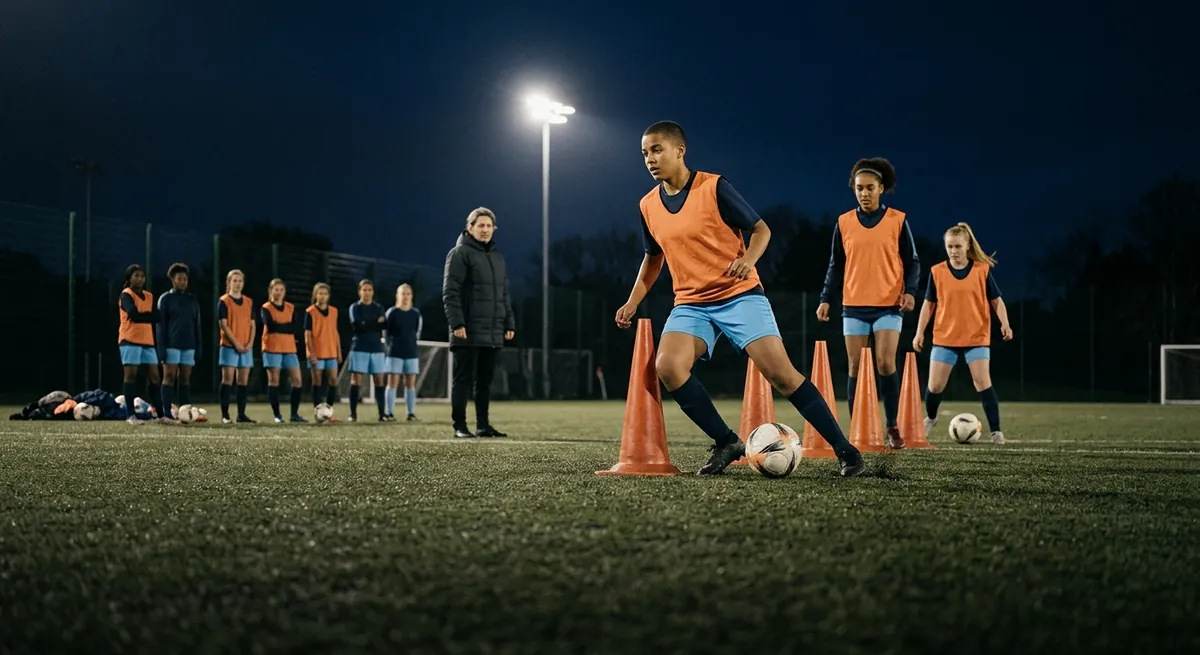

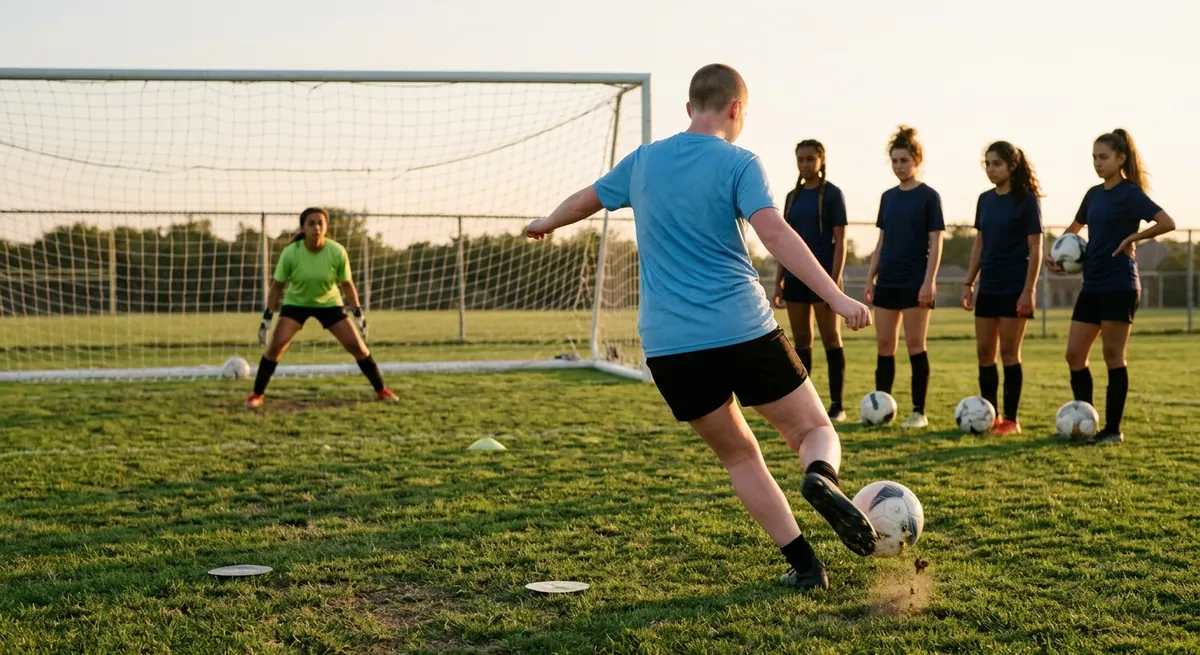
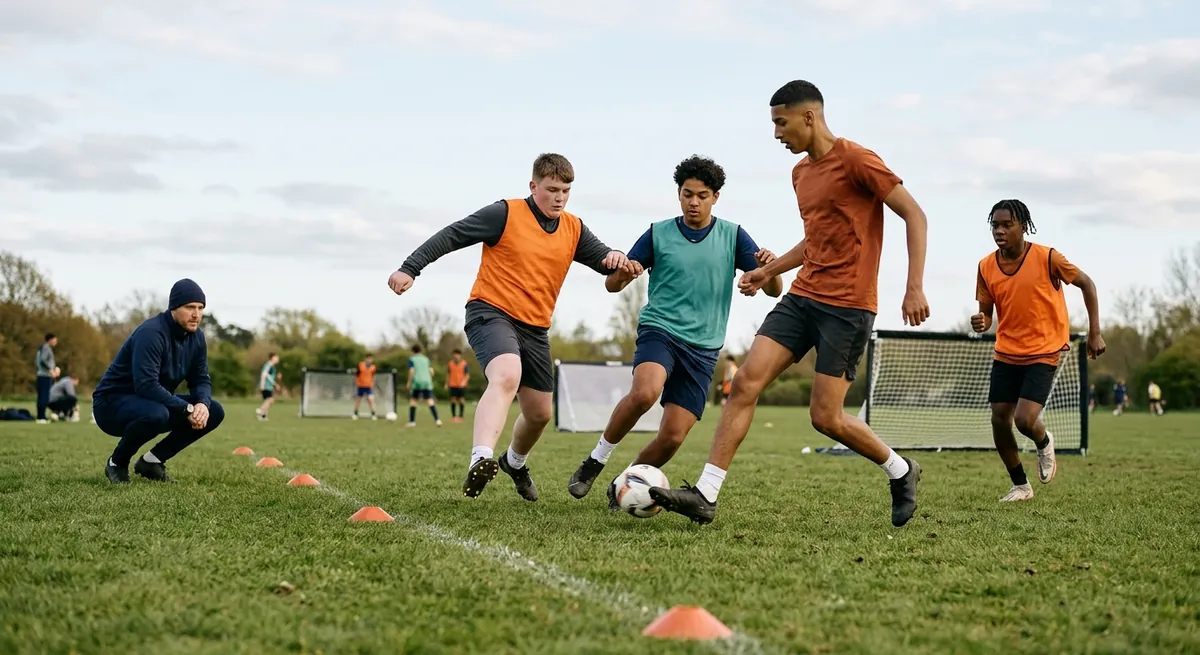
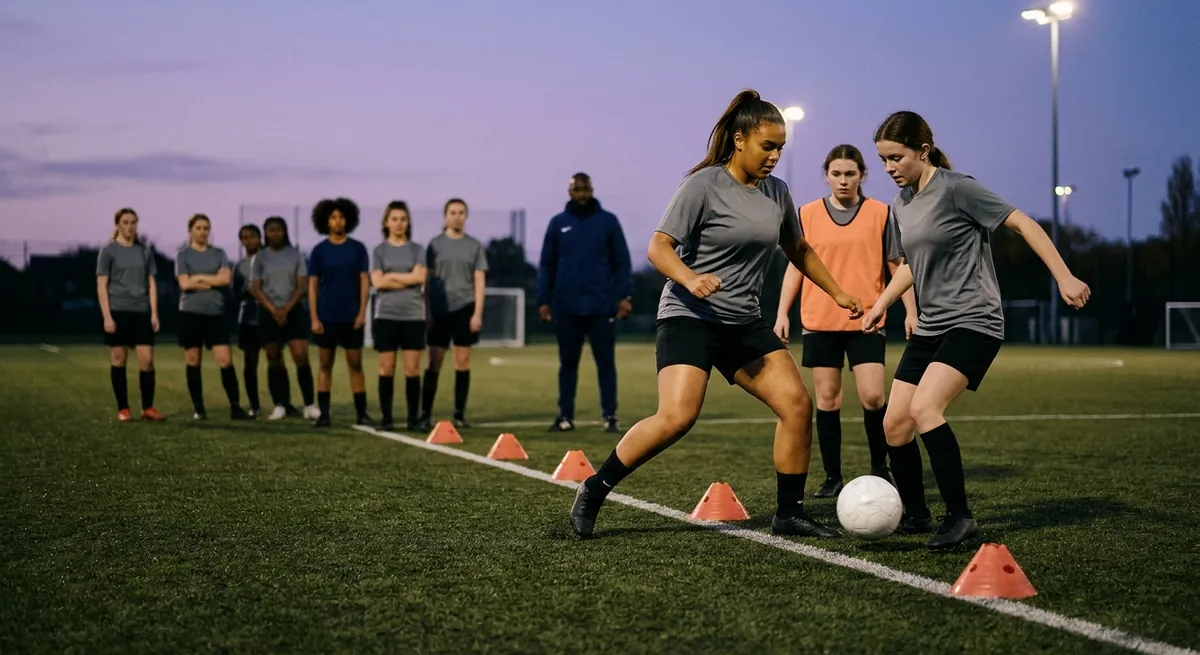
Small touches. Never more than a step away.
Drills, ours and yours
A library of soccer drills with the set-up and coaching points written out, one-to-one drills for a trainer, and room for your own beside them. A player can even draw one.
Plan it, run it your way, score it
Build a session from templates or your own, run it however you coach, and count the reps or score each drill as it happens, even with no signal.
Targets and homework that come back counted
A coach sets a target at practice and a trainer sets homework. The family’s phone counts it during the week, so it comes back as a number rather than a promise.
One record, and a report for the family
Every session lands in the player’s own record, however it was run. A trainer sends a private report after each session, and a coach a season report at the end.
The Audio Coach, if you want it
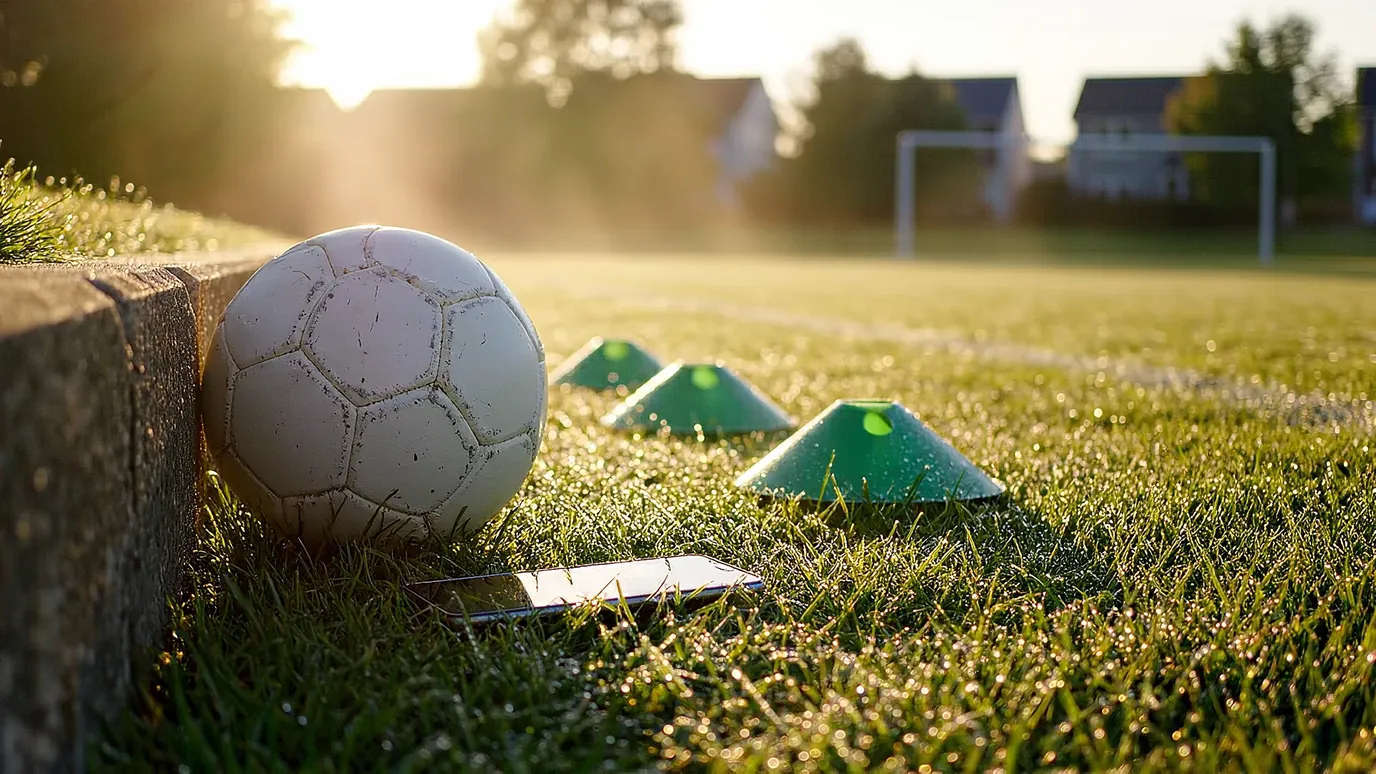
Press play and it runs the drill out loud on the clock. On four drills the phone hears the ball, counts it, and checks later whether the skill held. Optional, always.
The PE record, for a homeschool family
For a homeschool family, the same sessions become PE hours, a portfolio and a transcript anyone can verify, against what your state asks for.
Not ready for an account? Some of it is free to use now: count your juggles, map your recruiting year, build a practice plan, price a session, or check your state’s PE rules. All free tools
A Coach That Has Already Read the File
Most chat assistants know only what you type into them. This one is signed in to the account, so it starts from your player’s age band, the drills they have been heard on and what held at the last check — and any drill it points to comes from their own program, never one it invented.
When it thinks a session is worth recording it proposes one and stops. Nothing reaches the record until a grown-up taps the button — a figure a machine wrote must not walk into a document you may hand to a state, a school or a coach.
Illustration. The drill, the check and the dates in a real conversation come from your own player’s record.
Something to do every day, and proof it worked
Soccer training a player wants to come back to every day, and a record of what it changed. Each card links to the page that shows the rest.
It checks whether the skill held
On a drill heard before, the coach opens in silence and listens to the first twenty touches, played cold, against your player’s own steady rhythm from earlier sessions. Practice is easy to count; this is what was kept.
Advice from their own record
Coach Spatrian answers from your player’s own sessions, not from a generic plan, and suggests what to work on next. It proposes; a grown-up presses the button.
Daily puzzles and games
A daily tactics puzzle, a pass to weigh, a door to close and a run to make, plus a rhythm game on the ball and a great player every Monday with a move to earn.
A match every week
The Season turns the week into a match of backyard challenges against a fixed ladder of opponents, so the only player being measured is yours.
Head up, decide fast
Scan & React puts the shoulder check into a game on the phone: look, read the call, play the ball the right way, faster each level.
Their own drills
A player draws a drill on a pitch, watches it play itself, tries it once, and a grown-up approves it before the family plays it.
The Audio Coach hears the ball and counts the touches
On four drills, where one rep is one sound — a pass off a wall, a shot, a touch, a juggle — the phone lying on the grass listens for the ball. It asks for three touches first to be sure it can hear them, then counts every rep and says when the rhythm starts to wobble, while there is still time to fix it. Every other drill, and every session you run your own way, is counted by hand.
- Three touches to learn your ball, then every rep is counted for you.
- A count it was unsure of waits for a grown-up to confirm before it counts.
- What it keeps is the moment of each touch, as a timestamp. No audio is stored, sent anywhere or turned into words.
Wall Passing
Run 28 · best 39
A Backyard Soccer Match Every Week
A player with a club has a season — training builds to a match, the match gives a result, and the results add up. A player training on their own has a to-do list. The Season is the missing half: five challenges chosen from your own player’s record, about forty minutes in the backyard, and a table that keeps itself.
The minutes land on the record when the match is finished, so the write-up is a by-product rather than a second chore. You play a fixed target for the age band — never another family’s child.
| Season | P | W | D | L | Pts | Form |
|---|---|---|---|---|---|---|
| 2026/27 | 7 | 6 | 1 | 0 | 19 | DWWWW |
One row, because there is only ever one player in it. Three wins in a row moves you up a rung and the target gets harder.
Decision-Making, the One Thing They Cannot Practice Alone
Technique needs nobody else. Decisions do — and a player training on their own sets the pace of every repetition, so nothing ever makes them scan and choose under pressure. The phone calls a direction or a numbered cone while they dribble, faster each level, and a grown-up taps whether they got there.
Twelve levels, four kinds of call — including one where the call is the thing to resist. It logs as training minutes, and it is only ever compared against your own player’s earlier sessions.
Three consecutive calls. A real session draws its order and timing fresh, so the pattern cannot be learned.
Soccer IQ Games for the Days Nobody Goes Outside
Rain, a cast, two weeks of January. The session is off and the player still wants something to do with the game. Seven modes built on the material they are already working through — the checks for their age band, the coaching points of the drills in their program, and the Laws of the Game as they are actually written, with every rules answer citing the clause that settles it.
Eight questions a session. Playing earns XP and moves nothing else: no minutes, no average, and nothing that reaches a record. An evening on the sofa is not an hour of training.
Seven modes in all, for ages 13–18. The Coach’s Eye, Soccer IQ Quiz Time, Small-Sided Games and How the Game Got Here complete the set.
Daily Soccer Puzzles: Something to Play Every Day
A player in a club has reasons to turn up between sessions. The Clubhouse gives every player a reason every day: a rhythm to echo on the ball, a tactics puzzle, a great player every Monday with a move to earn, an escape room whose locks open with touches, a tour of famous grounds driven by their training minutes, and a weekly trading card of their own measured numbers. Three more daily puzzles sit on the same pitch: how hard to play a pass, how to shut every passing lane, and where to run so the pass can reach you.
Each is finished in minutes and done until tomorrow. None of it writes minutes, and nothing in it compares your player with anyone else’s. Where the phone listens, it keeps the moment of each touch and nothing else.
Your Player Designs Their Own Soccer Drill
A player draws a drill on a pitch — cones, players, runs, dribbles, passes, even a curled one — and watches it play itself. They try it once and send it to a grown-up. Once it is approved it belongs to the family, and everybody plays it: easier or harder, a left-foot version, and a best of their own.
A grown-up can share a drill into their co-op or team, or, with consent, send it to Spatrian’s library, where staff review it and publish it credited only by age group.
Family plan and above, and the Player plan. Designing earns XP, never minutes; nothing is ranked against another family; and nothing your player types is ever sent to an AI.
The App in Motion: Five Real Screens
Not mock-ups. Each of these is the app itself: the listening coach counting a drill, the card a player earns, the tour their minutes drive, a puzzle a day, and the record a grown-up keeps.
Silent, eight seconds each, bar the first. Every figure on these screens belongs to a demo account, never a real child.
How Spatrian Works: Up and Running in Minutes
No coaching experience required. A parent holds the account; the player gets their own way in. A coach and a personal trainer each have an account of their own.
Say who it is for
A player at school or in a club, a coach, a personal trainer, or a homeschool family. The sign-up asks once, and the app shows each household the things that are theirs.
Add your player
A first name and an age band. The player signs in with a PIN of their own on a phone you have paired, and marks sessions done for you to confirm.
Train your way
Run a session with the Audio Coach, or plan and score your own. Either way it lands in the record, and where the phone can hear the ball it counts for you.
Read the record
Every session, however it was run, in one record: a report from a trainer, a target from a coach, a match at the weekend, and a check when a skill comes due.
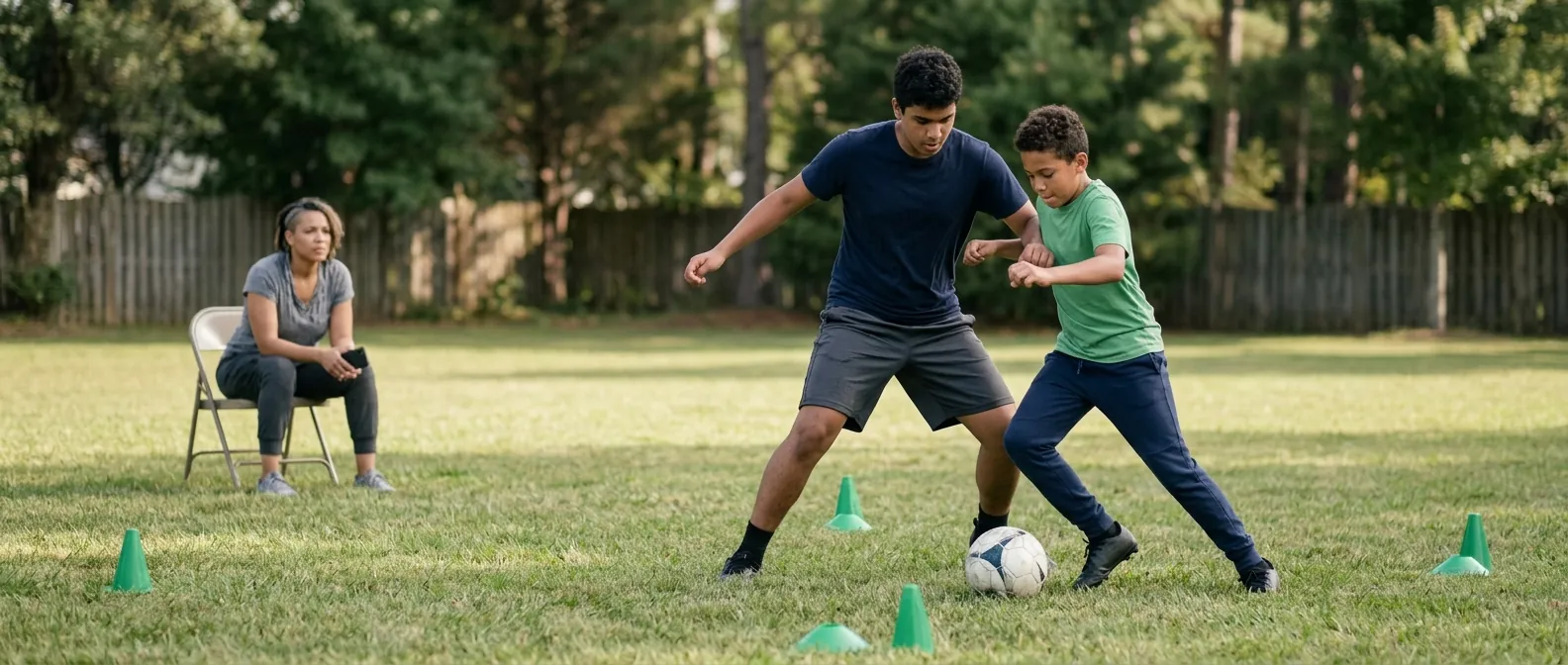
Coaching a team? See the week, not just the ninety minutes.
Your squad, calendar and session plans in one account, from your account alone, whether or not a family ever signs up. Set a target at practice and, for a family that connects, it comes back counted by their phone. Run the whole session from yours, your way, with your own drills beside ours, read an AI report of the match from any video, and send each family a season report at the end. The Audio Coach is there for your families if they want it.
Nobody ranked, and nothing reaches you without a parent’s yes. What a coach sees, and what stays with the family →
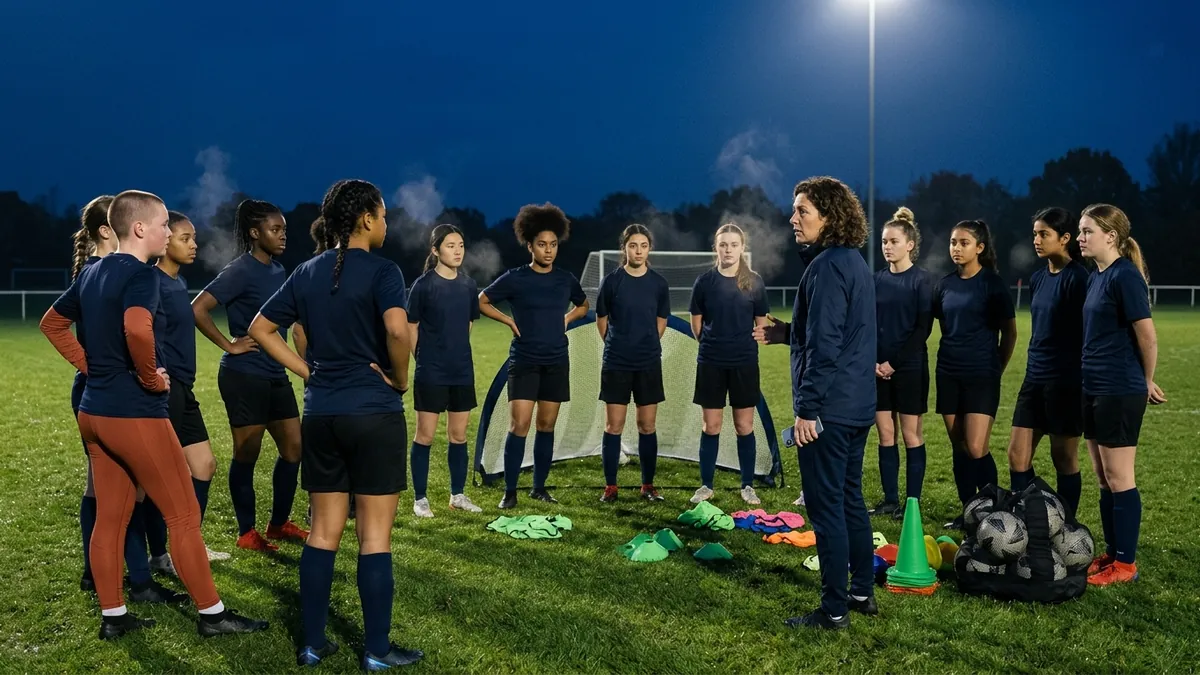
Training players one to one? Show every family what the hour bought.
Your clients, their goals and their progress in one account. Build each session from one-to-one drills, score every drill as it happens, and send the family a private report they open on any phone. Your method stays yours, with your own drills beside ours and no audio coach unless you want one. Your clients are yours alone, and families need no account to read what you send.
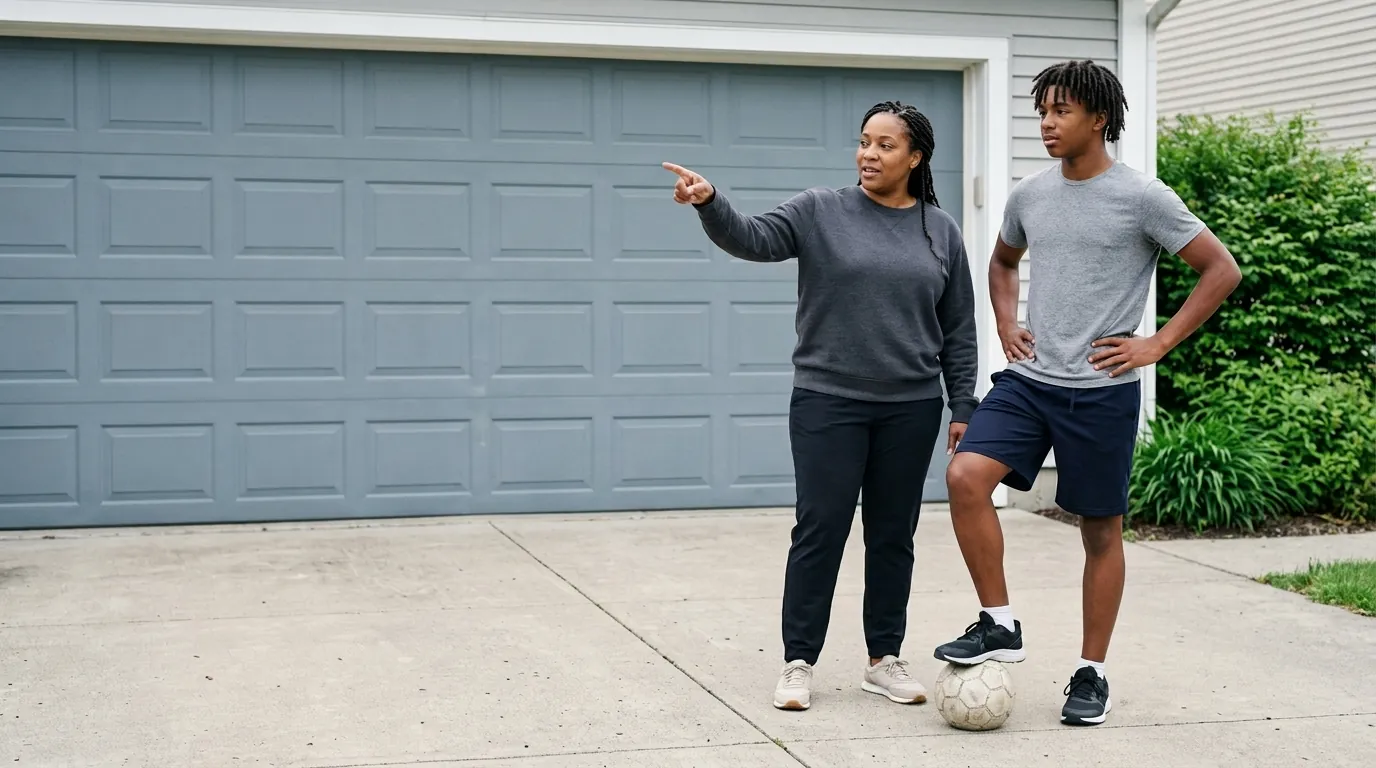
Homeschooling? The PE record is kept too.
For a homeschool family Spatrian is also the PE record: the hours logged as you go, your state’s requirements, a portfolio, and a transcript that carries a fingerprint anyone can check in our public register without an account. A teen at school already has a school keeping theirs, so they are not asked for any of it.
A drill the phone heard reaches that portfolio as evidence a skill was learned, not just practiced. Try the check on a sample transcript →

What it will not do
Four promises, the same whichever door you came in by.
No leaderboard without your yes
No ranking against another family’s child unless you turn it on: the weekly board and Pitch Duel each use a made-up name. Every other number is your player against their own past.
No guessed number
A count on the screen is one the phone heard or a grown-up confirmed. A count it was unsure of waits.
Nothing a machine writes down
Coach Spatrian proposes a session and stops. Nothing reaches the record until a grown-up taps the button, and no AI ever grades a child.
Nothing collected
No audio, location or photo of your child is collected to make any of it work. Where the phone listens, it keeps a timestamp and forgets the sound.
A soccer training platform for players aged 13 to 18 and the people who develop them, in four parts that each work on their own and connect when you want them to. The player trains and keeps one record of it, their coach sets targets the family’s phone counts, their personal trainer sends the family a private report after every session, and for a homeschool family the same sessions become the PE record.
No. Each part stands on its own. Use one, or connect them: a player needs no coach or trainer, a coach needs no family to sign up, a trainer’s families need no account, and connecting by code is always your choice.
The player and their family. A coach or a personal trainer sees it only once the family connects them by code, and then only what the family lets them see. A trainer’s own clients are theirs alone, and nothing is shared with other players unless a parent switches it on.
Players aged 13 to 18, in three age bands: U14, U16 and U18. The drills, lessons and games are written for those ages.
No. Every drill has its set-up, steps and coaching points written out. A ball, a few cones and some open space are enough, and many drills fit a backyard, a driveway or a wall. The space check counts how many fit yours.
No to both. The Audio Coach is one optional tool: a session you run your own way and count by hand lands in the same record. Where the phone listens for the ball, it keeps the moment of each touch as a timestamp and nothing else. No audio is stored or sent anywhere.
First beta group · forming now
Spatrian Is Opening to a Small First Group. Free.
We are taking in a small first group, few enough that we can read every piece of feedback and act on it. Tell us which of the four you are, and we will email you when a place opens.
- Free for the whole beta. There is nothing to pay now and no subscription behind this.
- No card, and nothing to cancel. We ask for an email address so we can offer you a place.
- Tell us plainly what is missing or wrong. That is the whole ask, and it is what a place in the first group is for.
Join the waiting list
Places are limited, so the list is a queue rather than a place. We will email you when one opens.
We send one email to check the address is yours, and nothing else until you click the link in it. After that: an email when a place opens, and three short notes about the free tools while you wait. Every message we ever send can be unsubscribed from in one click.