The One Thing You Cannot Practise Alone
A child on their own can build a first touch, a weak foot and a clean strike — technique does not need anybody else. Decisions do. Nothing in a solo drill ever makes a child scan, choose and execute against something they did not pick, because they set the pace of every repetition. Scan & React is the part of the game that was missing from the backyard.
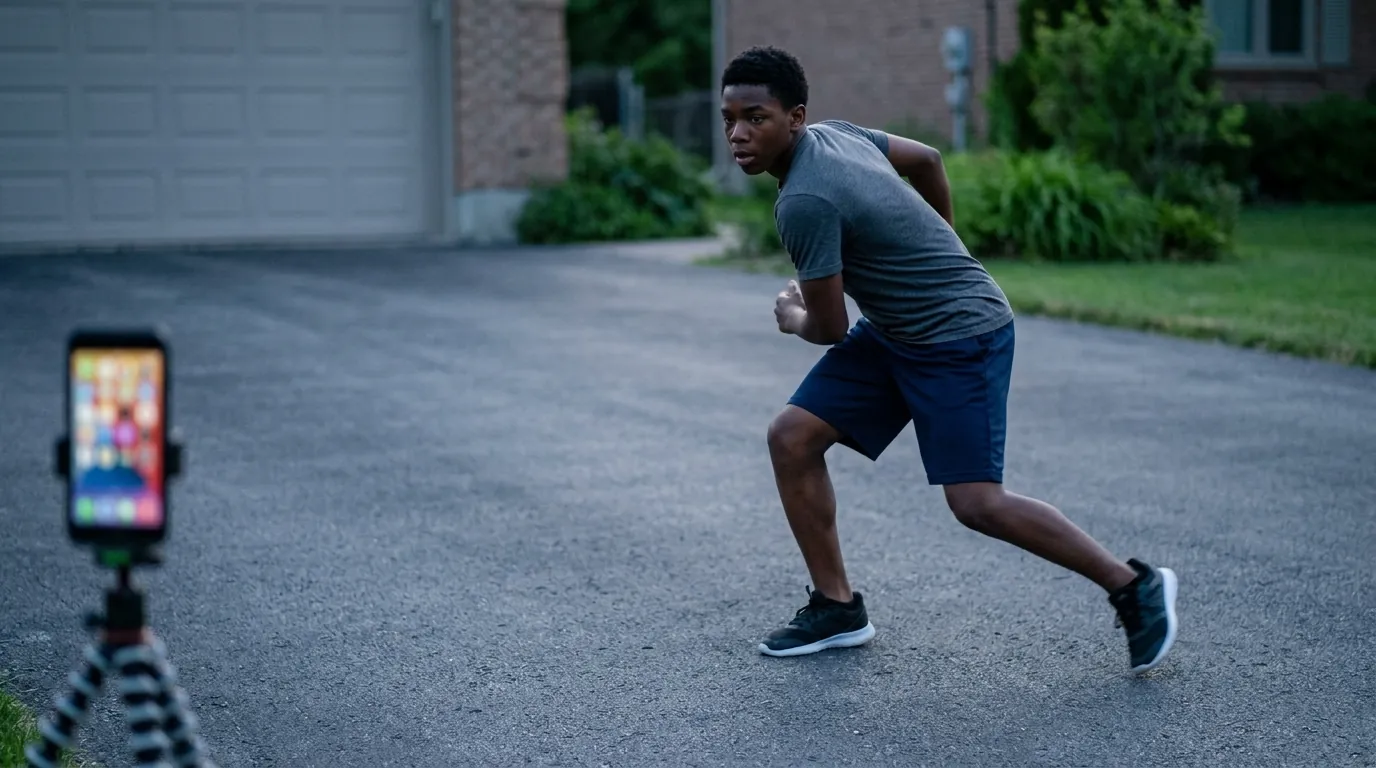
Your phone becomes the thing they react to
Your child dribbles in a small square. The app calls a direction, a numbered or coloured cone, or an action — at a moment they cannot predict — and they have to find it and do it before the next call lands. You watch, and tap whether they got there.
An illustration of four consecutive calls. In a real session the order, the timing and which round you are in are drawn fresh each level, so nobody can learn the pattern.
Twelve levels, and a definite place to stop
Each level calls faster than the last and adds more things to choose between. Get three quarters of a level right and it moves up. Miss two levels in a row and it stops there — the same shape as the shuttle run in the Home Combine, so it is one idea to learn, not two.
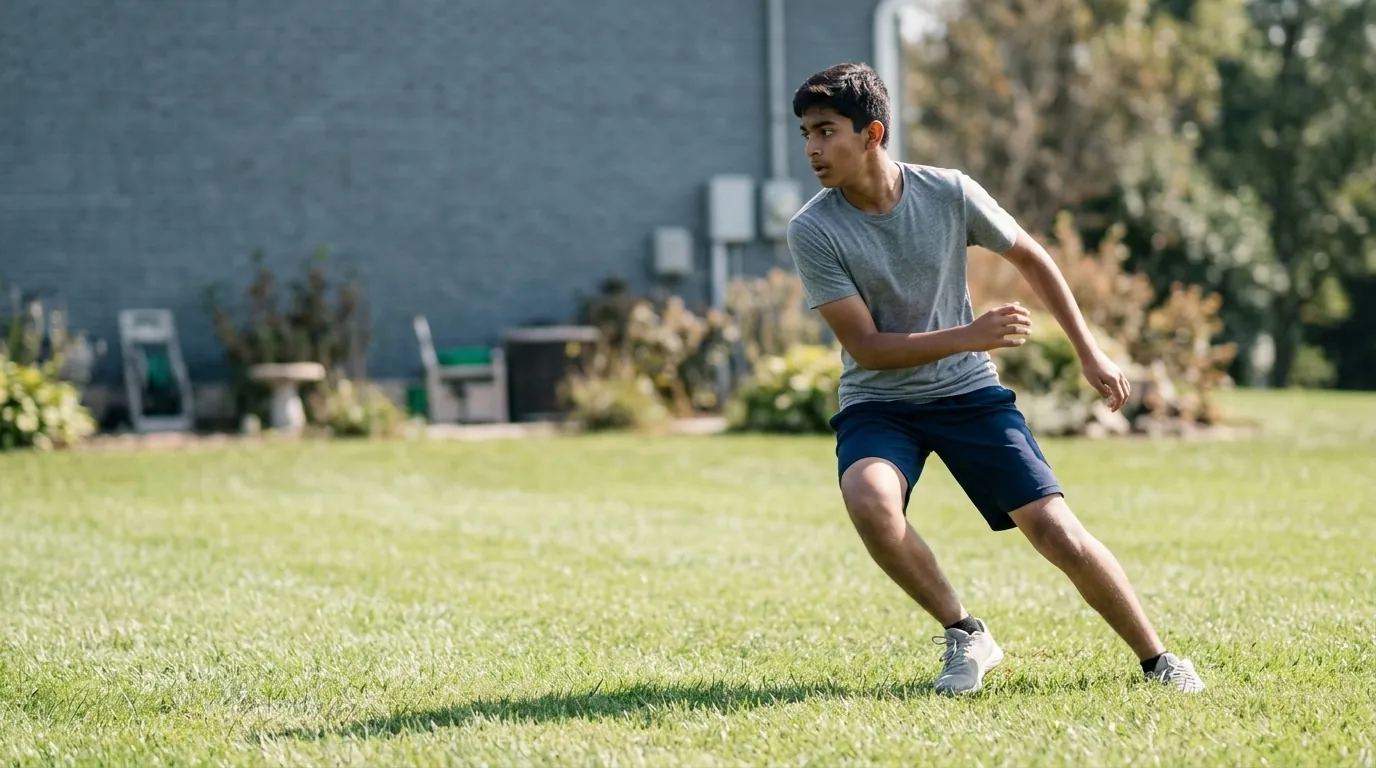
The score is the highest level cleared, never the highest attempted — reaching level nine and failing it does not make a child a level-nine athlete.
What it will not claim
It times your thumb, and says so
The app records the gap between the call and your tap. That is genuinely useful for watching one month against the next — and it is not a reaction time, because your own reaction is inside every reading.
So it is never printed beside the figures sports science publishes for elite players. A number is only worth having if it is honest about what produced it.
Your child, against your child
Every chart compares this child to their own earlier sessions. There is no ranking against other families and no leaderboard, here or anywhere else in Spatrian.
Many families chose homeschooling to get away from exactly that, and a board naming other people’s children turns a roster into a privacy question.
It bends around the child in front of you
A sensory plan keeps the training
An unexpected shout is the thing a sensory accommodation exists to prevent. So when a child’s plan says so, the calls arrive on a steady announced beat instead. They know one is coming and still have to work out what it is — the thinking survives, only the ambush goes.
Seated, standing still, or purely tactical
This is the rare soccer drill that loses nothing when the running is removed. Your child can point at the cone, or simply call it, instead of dribbling to it, and every level stays exactly as long and as hard as it was.
Works with no signal
Every line the app can say is written down in advance and downloaded before you leave the house, so a field with one bar behaves the same as your kitchen. If a clip is missing, the phone speaks the line itself.
What an accommodation never does is make the ladder easier. The levels, the pace at which they clear and the number of calls in each are the same for every child, so a level reached means one thing — including against the same child’s sessions from before a plan existed.
And it counts as PE
A finished session logs its minutes to your child’s attendance record like any other drill, so the ten minutes you spent in the backyard calling cone numbers shows up in the hours your state asks about. The level reached goes on the record beside them.