Press Play.
Put the Phone Down.
You should not have to read instructions off a screen while your child waits. Every drill in the curriculum carries a written coaching track — setup, corrections, the countdown, the finish — and the Audio Coach speaks it on the clock, so the person watching your child is you. The voice on the clock is Coach Spatrian — the same coach the chat button opens, doing the part of the job that happens outside.
Three ways to be spoken to
The same drill, delivered for the person who needs to hear it. You pick per session, and the choice sticks per child.
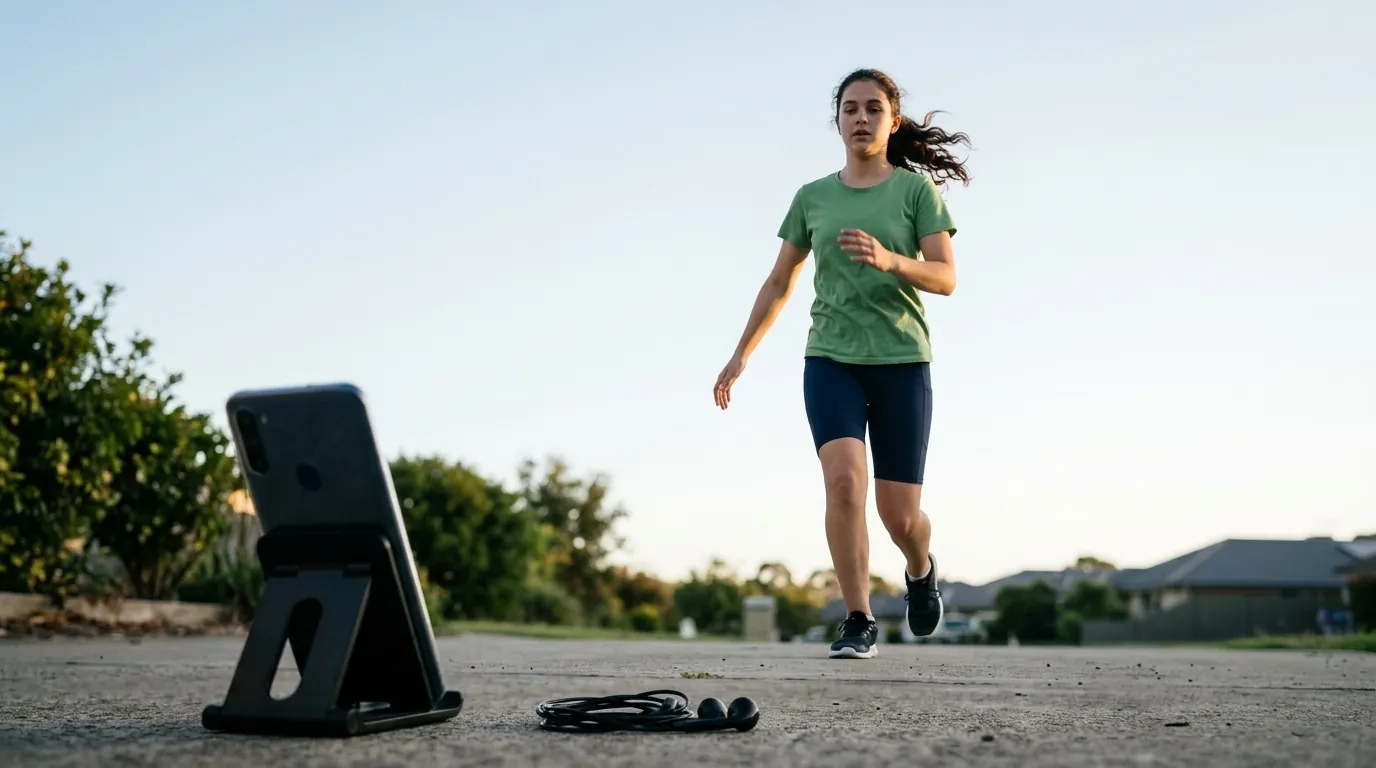
Across the backyard
Loud, energetic, addressed to your child. Phone on speaker on a step, and you are free to watch rather than narrate.
Inside of the foot. Nice and easy — don’t smash it.
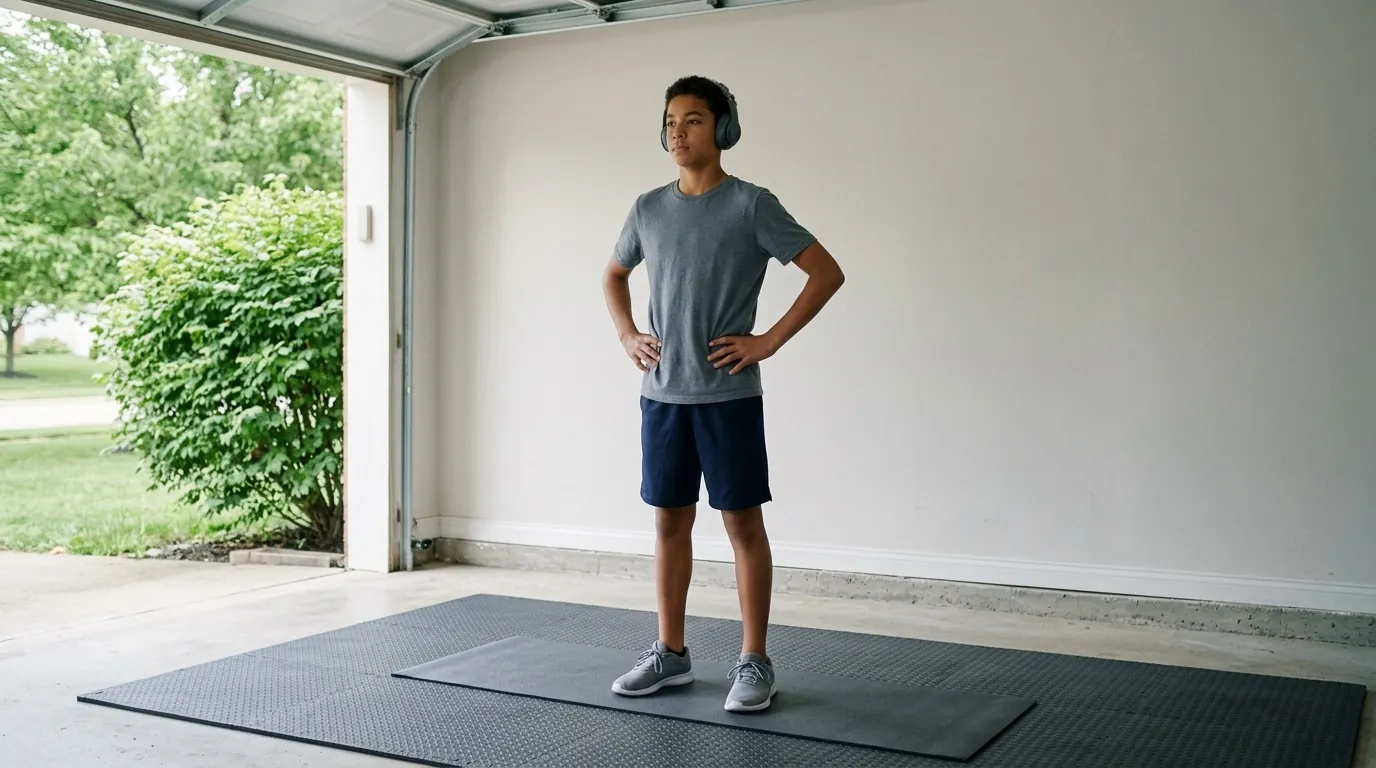
One earbud, just for you
Quiet and terse, addressed to the teacher of record. It tells you what to look for, so the coaching in the backyard is still yours.
Watch the plant foot. It should point where the ball is going.
A scene, for younger players
Two voices — the coach and Robo, an excitable kid sidekick who gets it wrong first. Children who tune out an instruction will follow a conversation.
Coach: Nice and easy — don’t smash it.
Robo: Aw. Smashing is my favourite part.
It keeps the clock, so nobody is watching a stopwatch
A track is not a list of instructions read out. It is a timeline: coaching lands where it is useful, and the furniture every drill needs — the start, the halfway mark, the one-minute warning, the finish — is placed automatically rather than written by hand.
- Change the length and the track re-times itself Authored cues are stored as fractions of the drill, not as absolute seconds. Shorten a ten-minute drill to six and the coaching redistributes instead of running off the end.
- Every drill has audio the day it is written The seeded drills have hand-authored timelines. Anything else — a custom drill, a lesson activity — gets a serviceable one built from the words already on it, so nothing is silent while it waits for an author.
- Whole lessons, not just drills A lesson is a sequence of activities, so its track is segmented: each activity gets a spoken transition, and the audio clock drives the activity stepper on screen. The page moves because the coach moved.
It obeys the accommodation plan
A child with an IEP used to get the same whistle, at the same volume, on the same clock as everyone else — through the one channel nobody can look away from. Three things change when a plan says so, and nothing else does.
No plan, an unreadable plan, or a standard plan all return the track exactly as it arrived. The accommodation is something your child’s plan turns on — never a different product you have to go and find.
Pick the voice, the pace, and how much it talks
Thirty voices exist. Nobody standing in a backyard wants to audition thirty, so each register gets a shortlist chosen for its job, and you can hear one before you keep it.
A voice per child, per register
Bright and carrying for the child in the backyard; calm and unhurried for the earbud. The choice is stored against the child, so a voice they picked is theirs and it is there again next week. Picking a voice does not pick a different coach — it is the same coaching, spoken the way your child likes to hear it.
Slower, or quieter in the sense of less
Speaking rate is adjustable, because a spoken line is read at whatever pace it was given and some children need the words to arrive more slowly.
How much it talks has three settings. Turn it to light and the coach keeps the structure and the targets and drops the chatter — for a child who finds a busy soundtrack harder than no soundtrack at all.
It works where PE actually happens
Which is a park with one bar of signal, or a backyard where somebody cannot hear the phone.

Downloaded, not streamed
Save a drill’s audio before you leave and it plays with no signal at all. The button tells you when the whole track is on the device rather than leaving you to find out in the car park.
Every line is also on screen
Nothing is spoken that is not printed. A deaf or hard-of-hearing student follows exactly the same session, reading the same coaching, on the same clock. Every cue is listed with its timestamp and a button to hear that one line again.
It never goes silent
Where a line has not been recorded in the coach’s voice yet, the player falls back to your device’s own voice and says that it has, rather than playing nothing and leaving you to guess.
Two children, one parent, one drill
Coaching siblings together is the normal case in a homeschool, not an edge case.
Roles up front, and the swap called halfway
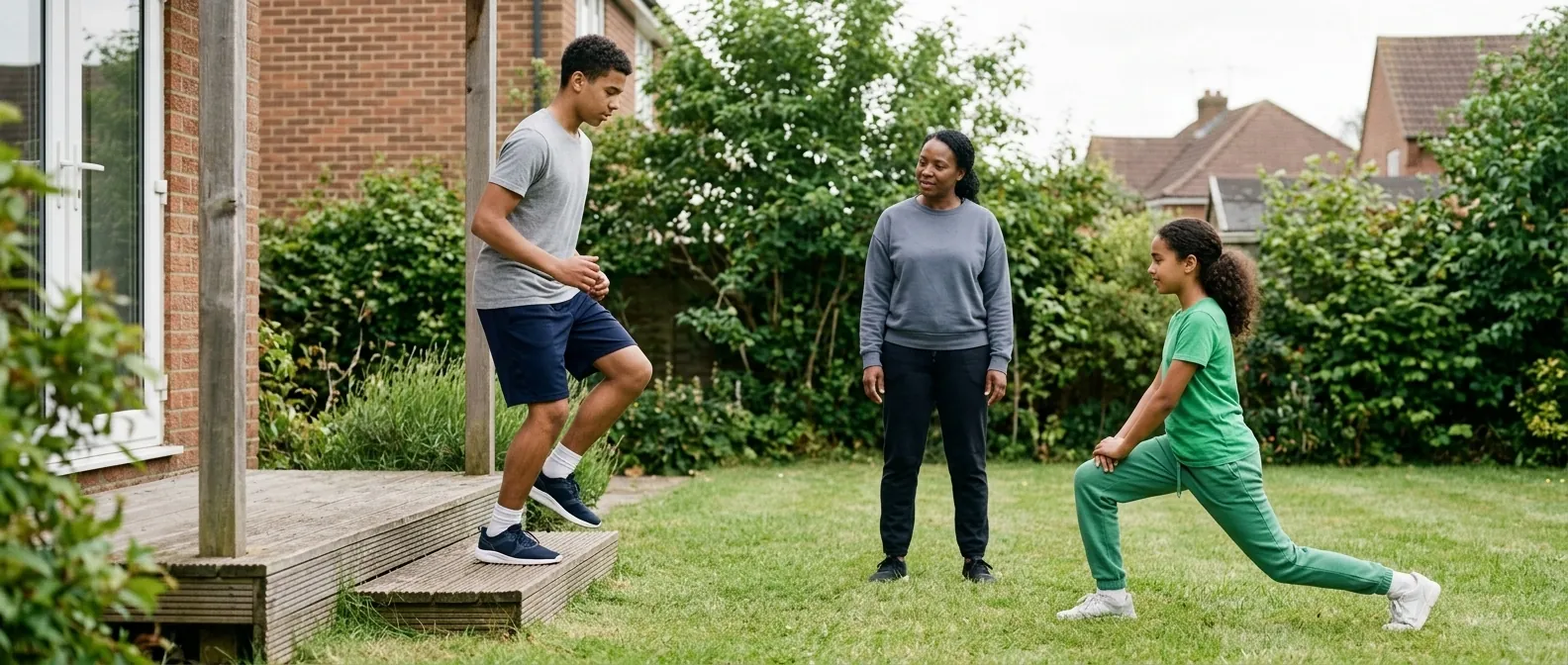
Run a drill as a pair and the track assigns the working role and the resting one, then calls the change-over, so one child is not left standing while the other is coached. The technique advice itself is untouched — it is the same whoever is passing.
Names arrive the way they do everywhere else here: the first run says “attacker”, and the version that says Maya is rendered behind you for next time. A clip naming two children is a clip per pair of names, which does not end.
Two children, two records
Siblings are rarely the same age, so only the spoken layer is shared: the session is logged against each child separately, on their own record, under their own rubric. That is what a transcript needs.
And the second child is authorized against your account rather than taken on the browser’s word — a session logged against another family’s child would be worse than no pairing at all, so an id that fails the check simply runs the drill solo.
The drill ends with three questions, out loud
The rubric is the most valuable thing a parent produces — it feeds the portfolio, the report and the transcript. It is also the thing least likely to get filled in, because it lives on a form you reach later, indoors, after the moment has gone.
Asked while you are still on the grass
Three questions, about twenty seconds, each answered with one tap. You are already wearing the earbud and the session you are assessing happened ninety seconds ago.
Three, not six: ask all six criteria and a drill turns into paperwork, and honesty drops off around the fourth. The three that carry the most signal are asked, and which three rotates, so a term still covers the full set.
Words, not a number out of four
The spoken answers keep the rubric’s own bands — “did it with little help” rather than “3”. A parent tapping a number is guessing at a scale; a parent tapping a description is reporting something they just watched.
And when the drill is finished, the minutes are written to the compliance log as documented instructional time — the same log the transcript is built from.
Fifteen seconds is enough to judge it
There is a real minute of coaching on the homepage — both registers and the Coach and Robo scene, with the script printed beside it. No account, nothing logged.
Hear the sample Get Started FreeOn what is measured. The player records a small, fixed set of moments — a drill started, a mode switched, where in the track somebody stopped — so that a drill everybody abandons at eight minutes can be found and fixed. It is a closed list of events with nowhere to put free text, it is stored on Spatrian’s own servers, and no third-party analytics service is involved. Children use this product under parental consent; their session behaviour is not something to hand to an advertising vendor for the sake of a nicer dashboard.